

Blog
How the HUB and DCC+ Work Together to Manage EV Charging Safely and Efficiently

October 28, 2025

4 minutes
At the heart of every smart charging system is a powerful decision-maker. Ours is the HUB, designed to optimize how energy is distributed across multiple EVs, bringing intelligence and balance to building infrastructure. It constantly monitors how much electricity is being used in a building and ensures that electric vehicles charge efficiently, safely, and fairly within a building’s existing electrical limits. Here’s how it works behind the scenes.
Load Management: How It Works
At RVE, all our solutions use load shedding algorithms to manage power safely and efficiently. While some might think that temporarily cutting power to a charging station could be harmful or unsafe, this is a common misconception.
In reality, thousands of EV charging stations that use current interruption technologies have been operating safely for nearly a decade. Products such as RVE’s DCC and smart panels have successfully implemented this method for years—and with more than 50,000 units installed across North America, the reliability of this approach is well established. Other manufacturers like Eaton, Dandy, and SimpleSwitch also use load shedding through line-side switching, reinforcing its safety and effectiveness across the industry.
Operation
The DCC+ continuously monitors real-time energy consumption at the main electrical panel. When consumption exceeds 80% of the panel’s capacity, it temporarily pauses EV charging. Once household consumption remains below that threshold for more than 15 minutes, the DCC automatically restores charging. This dynamic process allows charging to occur when energy is most available—often during off-peak hours, when electricity is cheaper and grid demand is lower.
While load shedding might sound like frequent “on and off” switching, it’s important to know that EVs and chargers are designed for this. When charging is paused, the EV simply enters a standby mode and resumes automatically once power is restored. This behavior has no negative impact on the charger or the vehicle battery.
RVE has extensively tested this process across multiple EV models and with all major EVSEs on the market. In real-world use, the DCC+ typically pauses charging only for short periods—most often during evening peak demand when several household appliances are operating simultaneously.
This intelligent load management approach ensures safe, efficient, and cost-effective charging—without requiring costly electrical upgrades or risking system stability.
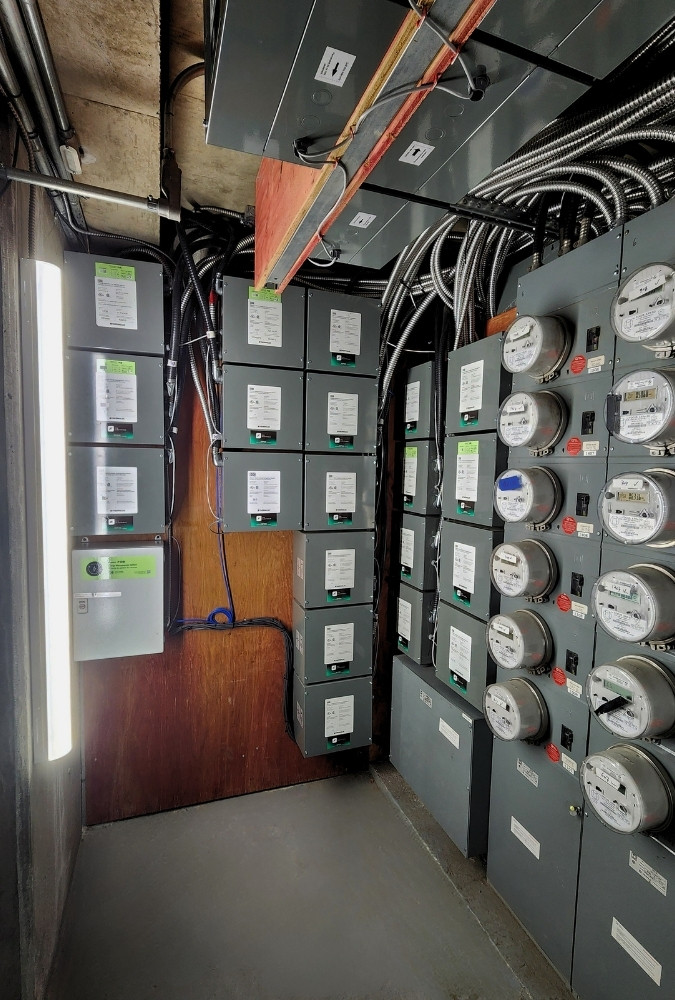
HUB
DCC+
DCC+ connection to the metering center
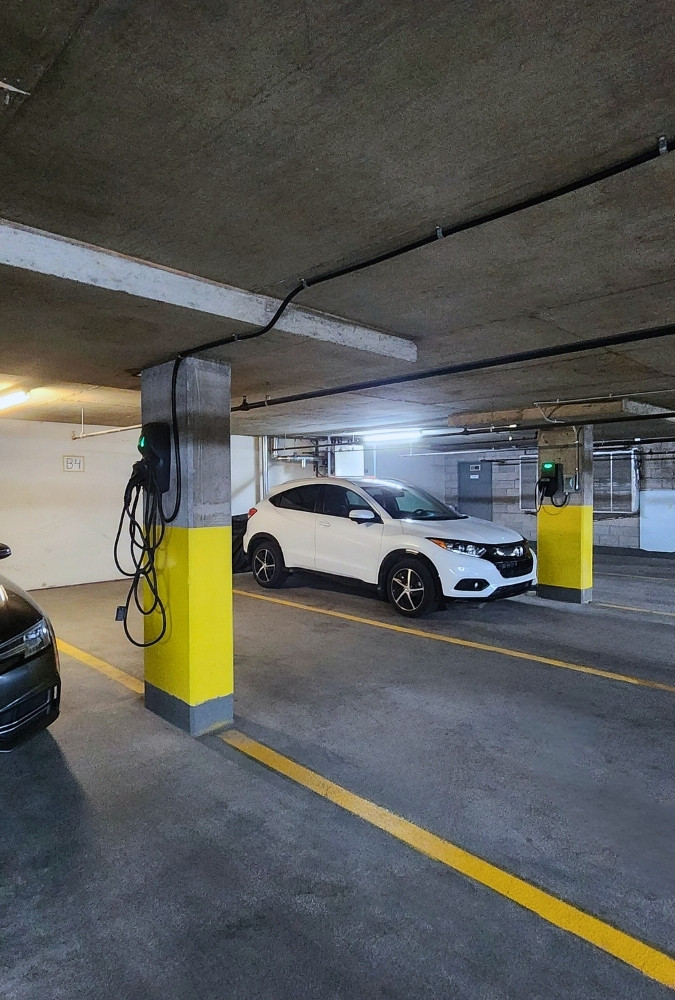
EV charger
Connection of the charging station to the DCC+
Fairness and Distribution: How the HUB Decides
The HUB and DCC+ communicate bi-directionally, forming an intelligent network that constantly exchanges information. The HUB can instruct any DCC+ to pause charging when necessary, and each DCC+ also sends real-time data back to the HUB.
Each DCC+ includes a current transformer that monitors the vehicle’s charging status. With this data, the HUB can determine whether a vehicle has just started charging, is halfway through, or is nearly full.
Using this information, the HUB applies a priority logic designed for both efficiency and fairness:
- EVs with lower battery levels are prioritized for charging access.
- EVs that are nearly or fully charged may have their charging temporarily paused during peak demand.
This ensures that everyone gets the energy they need—when they need it—without overloading the building’s electrical system.
To date, with over 50,000 RVE units installed across North America, not a single customer has reported being unable to charge their EV when required. That’s because our algorithms are specifically designed to maintain availability, safety, and fairness.

Installation diagram for the HUB and DCC+
Smart Power Distribution for the Future of EV Living
As more homes and multifamily buildings adopt electric vehicles, intelligent load management becomes essential. Systems like RVE’s HUB and DCC+ make it possible to maximize existing infrastructure, reduce installation costs, and ensure fair access to charging for all residents.
By combining advanced monitoring, bidirectional communication, and tested reliability, RVE continues to lead the way in safe, scalable EV energy management.
Products mentioned in this article


